

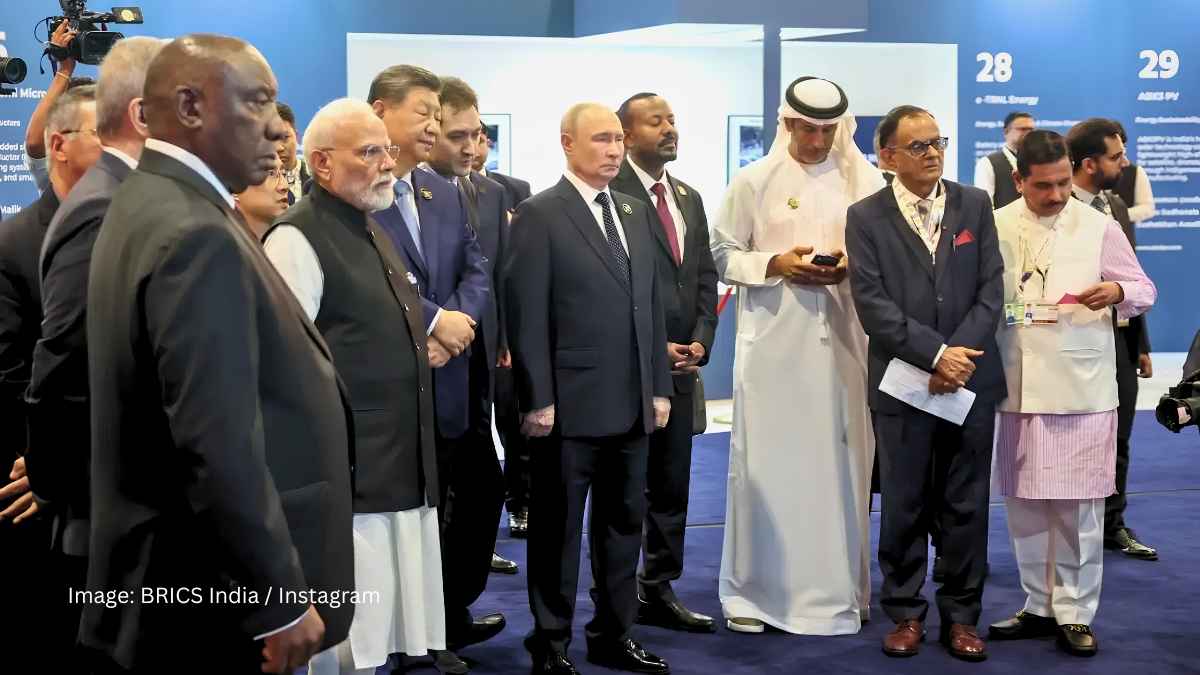
Leaders of the BRICS bloc unanimously adopted the New Delhi Declaration on Saturday, calling for sweeping reforms to global institutions, condemning what they termed unilateral acts of war, and pushing for greater representation of developing nations at the United Nations Security Council.
Prime Minister Narendra Modi announced the consensus document at the 18th BRICS Summit in New Delhi, describing it as the outcome of intensive negotiations that helped bridge sharp differences among member states, particularly over the ongoing conflict in West Asia. In his closing remarks, Modi said the changing world could not be governed by outdated institutions, and that reforms were now necessary in representation, responsiveness and rule-making.
The 140-paragraph declaration called for a structural update of the UN Security Council, with greater representation for developing countries from Africa, Asia, Latin America and the Caribbean. China and Russia, the bloc’s two permanent Security Council members, reiterated their support for India and Brazil’s aspirations to play a bigger role at the UN, including on the Security Council itself.
On trade, the declaration expressed serious concern over the rising use of unilateral tariffs and non-tariff measures, warning that such steps distort international trade, disrupt supply chains and worsen existing economic disparities. It called for a reformed, more responsive World Trade Organization and backed a gradual shift toward settling intra-BRICS trade in local currencies rather than the US dollar.
The declaration also strongly condemned terrorism and denounced unilateral acts of war, stressing the need to protect commercial navigation and the safety of seafarers amid the ongoing military conflict in the Middle East. Chinese President Xi Jinping, addressing the summit, urged the bloc to act as a peacemaker in that conflict, saying it did not serve the common interests of the international community, and confirmed that China would take over the BRICS presidency next year to host the 19th summit.
Representing 11 full members and 10 partner countries, the expanded bloc reaffirmed its commitment to resolving international disputes through dialogue and diplomacy, while backing a multilateral approach that respects differing national positions on major global issues.
